
3rd grade math
Third grade is the year of multiplication and division. Children learn their times tables, meet fractions for the first time, and start measuring area. This page lists every skill in the order it is taught, what mastery looks like, the signs a child needs help, and free 3rd grade worksheets and lessons for each one.
What 3rd graders learn in math
The Common Core puts most of grade 3 into four areas: multiplication and division within 100, fractions as numbers, area, and two-dimensional shapes. By the end of the year, children should know all the times tables up to 10 × 10 from memory.
Adding and subtracting within 1,000 should become fluent too. Those skills were introduced in grade 2, and children who are still shaky with them find multiplication harder.
3rd grade math skills, in order
Multiplication and division
What multiplication means (equal groups, arrays), the properties that make facts easier, the times tables to 10 × 10 from memory, division facts as the reverse, and two-step word problems.
Place value and adding to 1,000
Rounding to the nearest 10 or 100, adding and subtracting within 1,000 fluently, and multiplying one-digit numbers by multiples of 10, like 4 × 60.
Fractions
Unit fractions such as 1/4, fractions on a number line, simple equivalent fractions like 1/2 = 2/4, and comparing fractions with the same top or bottom number.
Measurement and data
Telling time to the minute and elapsed time, grams, kilograms and liters, bar graphs and line plots, area by counting squares and then multiplying, and perimeter.
Geometry
Sorting shapes by their properties, especially quadrilaterals (squares, rectangles, rhombuses), and splitting shapes into parts with equal areas.
What mastery looks like by the end of the year
- Answers any times table fact up to 10 × 10 in a few seconds, without counting.
- Solves 56 ÷ 7 by thinking “7 times what is 56?”
- Adds and subtracts 3-digit numbers with regrouping, including across zeros like 503 − 178.
- Shows 3/4 on a number line and explains why 1/8 is smaller than 1/4.
- Finds the area of a rectangle by multiplying, and knows it is different from the perimeter.
- Tells time to the minute and works out how long it is from 2:45 to 3:20.
Signs your child needs extra help
- Still counts on fingers for facts within 20, or skip-counts slowly to find a times table fact.
- Makes regrouping mistakes in 3-digit subtraction, such as taking the smaller digit from the bigger one.
- Thinks 1/8 is bigger than 1/4 “because 8 is bigger”.
- Mixes up area and perimeter.
- Can do multiplication facts but freezes on word problems that need them.
Times tables are the most common gap and the most fixable: five minutes a day for a few weeks makes a large difference. The Math Galaxy practice game and the times table worksheets below are built for exactly that.
Try a 3rd grade math problem
Tap a question to see the answer and how to get it.
What is 7 × 8?
56. A trick: 5, 6, 7, 8, so 56 = 7 × 8.
What is 56 ÷ 7?
8. Think: 7 times what is 56? 7 × 8 = 56.
What is 503 − 178?
325. Borrow across the zero: 503 becomes 4 hundreds, 9 tens and 13 ones.
Which is bigger, 1/4 or 1/8?
1/4. Cutting a pizza into 8 pieces makes each piece smaller than cutting it into 4.
What is the area of a rectangle 6 cm by 4 cm?
24 square cm. 6 × 4 = 24 squares.
It is 2:45. The bus comes at 3:20. How long is the wait?
35 minutes: 15 minutes to 3:00, then 20 more.
3rd grade math worksheets
Each one is a free PDF with an answer key and its own page with a preview, tips and a button to make a new version.
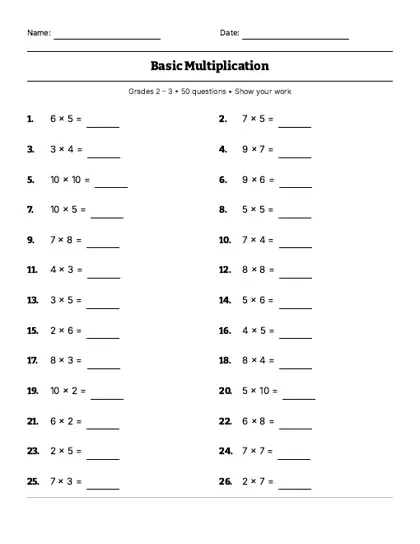 Multiplication factsGrade 3
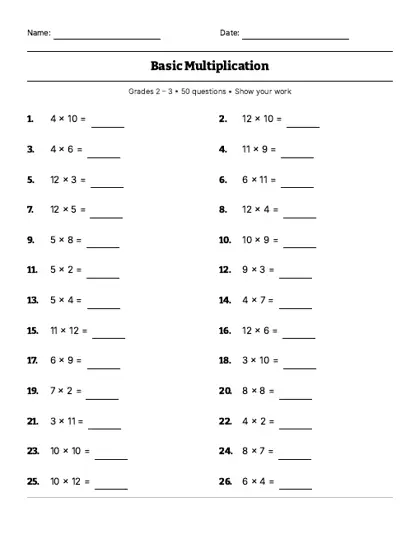 Mixed times tablesGrades 3–4
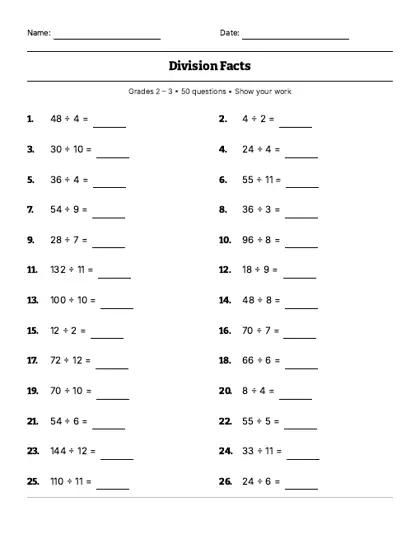 Division factsGrade 3
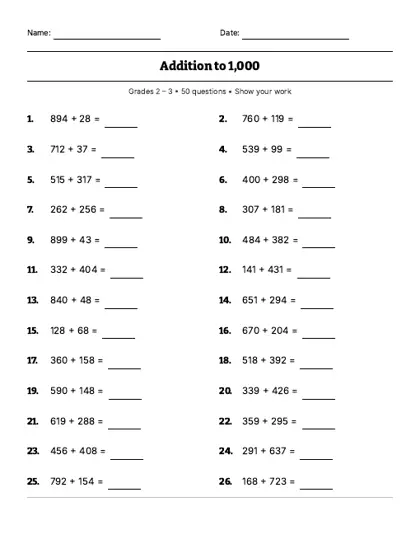 3-digit additionGrades 2–3
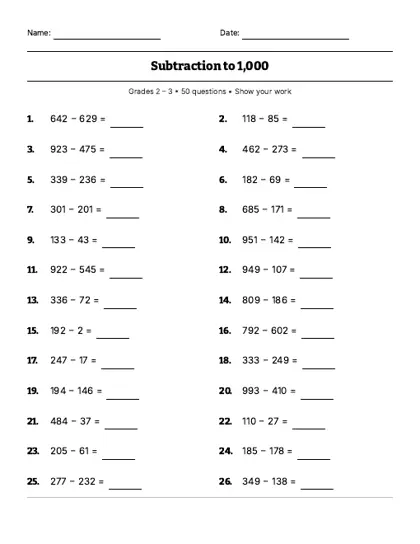 3-digit subtractionGrades 2–3
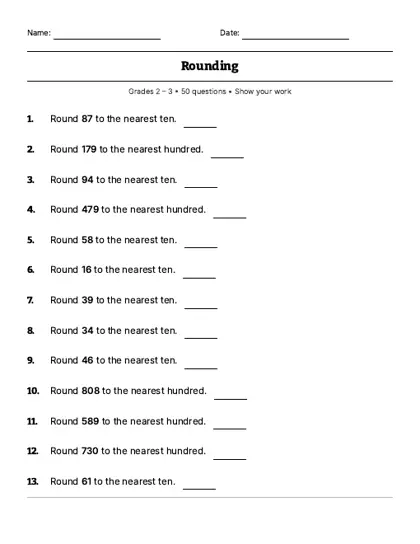 Rounding numbersGrades 3–4
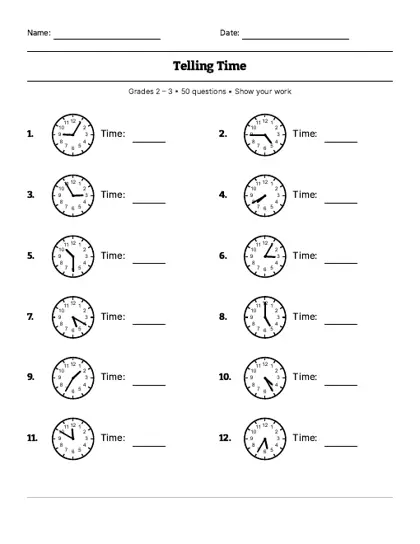 Telling timeGrades 1–3
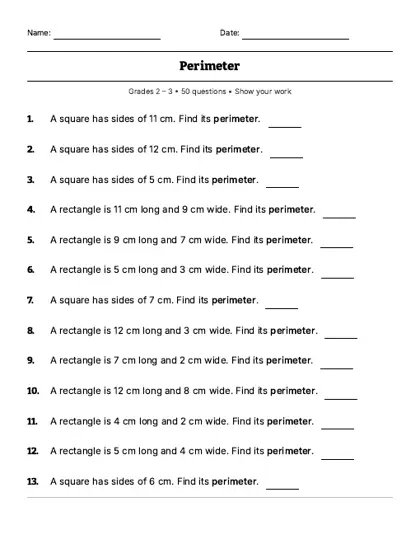 PerimeterGrade 3
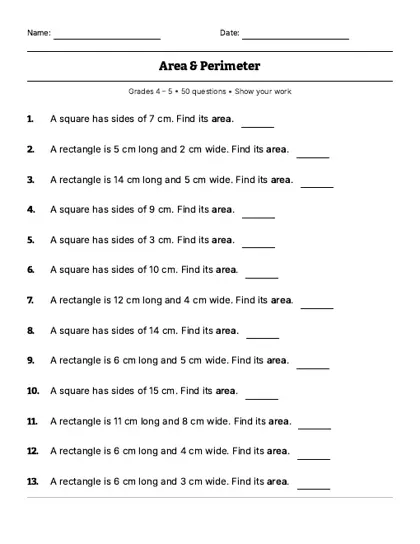 Area of rectanglesGrades 3–4
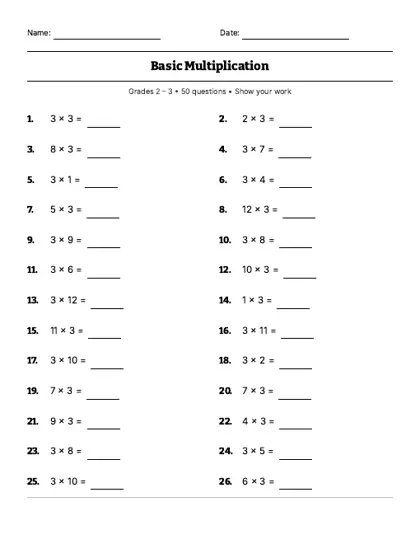 3 times tableGrade 3
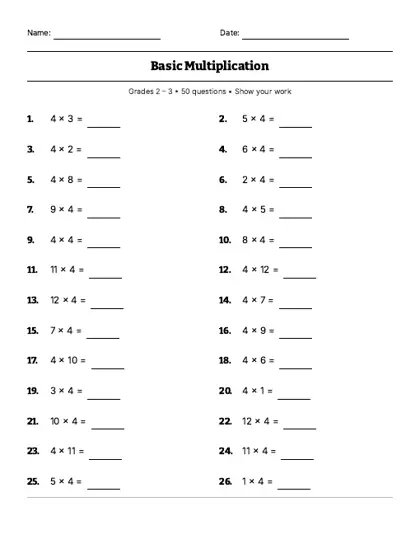 4 times tableGrade 3
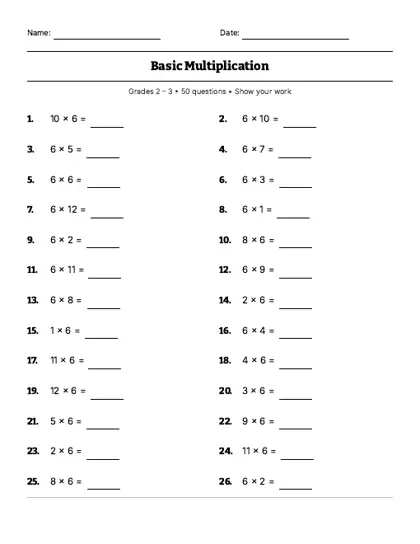 6 times tableGrade 3
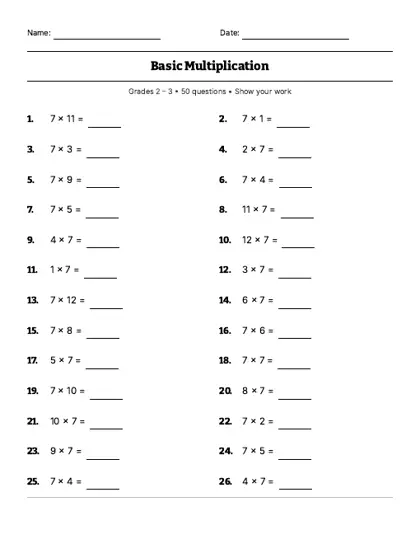 7 times tableGrade 3
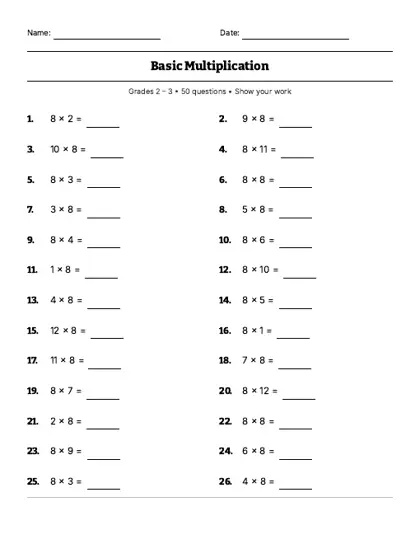 8 times tableGrade 3
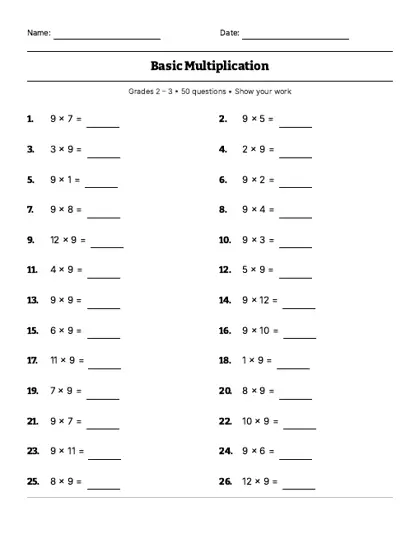 9 times tableGrade 3
More 3rd grade PDFs
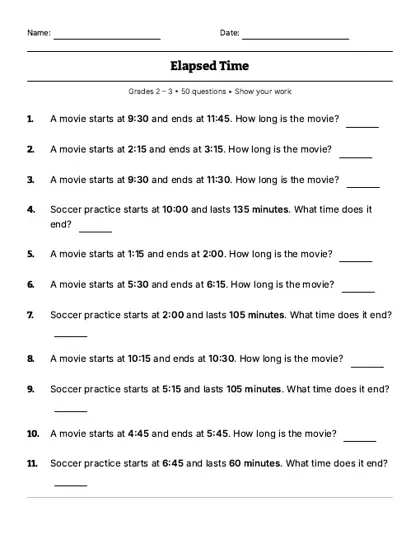 Elapsed timeGrades 2–3
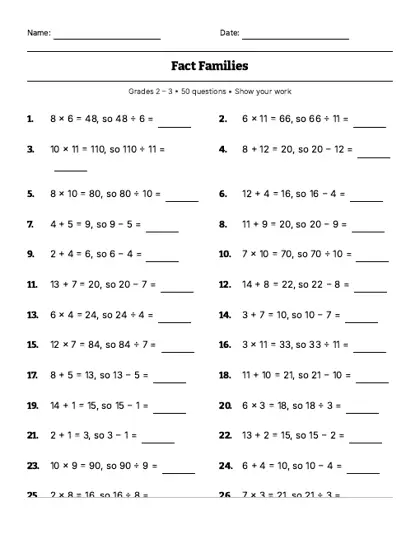 Fact familiesGrades 1–3
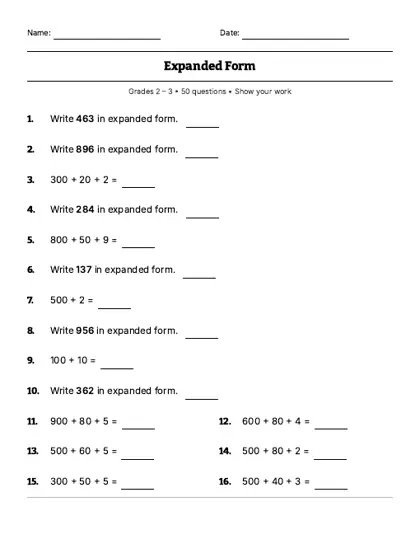 Expanded formGrades 2–3
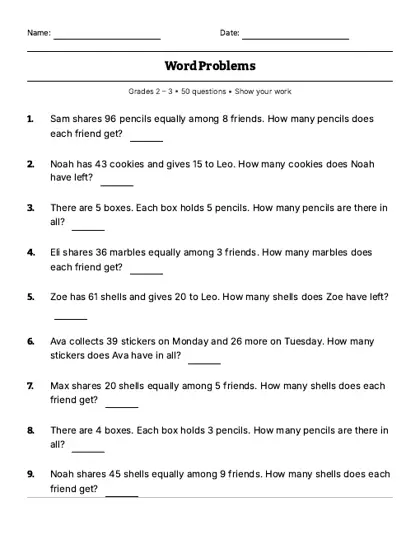 Word problems, grades 2–3Mixed
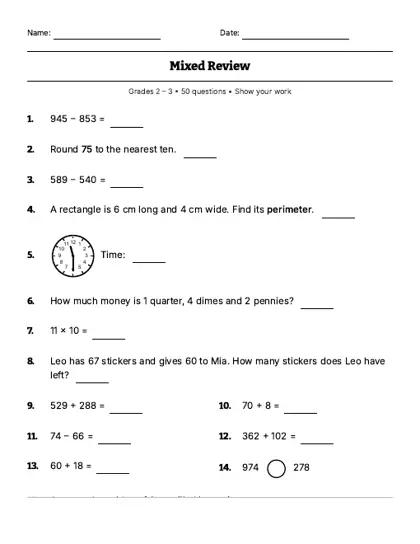 Mixed review, grades 2–3Check for gaps
3rd grade math lessons and charts
- Times tablesHow to learn them
- Multiplication factsEqual groups and arrays
- Division factsThe reverse of multiplying
- 3-digit subtractionBorrowing, step by step
- FractionsWhere fractions begin
- AreaCounting squares, then multiplying
- Multiplication chartTimes tables to 12
- Fractions chartFraction wall
How to help with 3rd grade math at home
Five minutes of times tables a day
Pick one table a week. Say it forwards, backwards and mixed up in the car or at breakfast. Short and daily beats long and weekly.
Cook with fractions
Half a cup, a quarter teaspoon: recipes make fractions real. Cut a pizza or sandwich into equal parts and name them.
Use an analog clock
Ask the time on a clock with hands, and how long until dinner or bedtime. Elapsed time is a big grade 3 skill.
Measure area with tiles
Count floor tiles or squares on a board game, then show that rows × columns gives the same answer.
See 2nd grade math for the skills that lead into this year, and 4th grade math for what comes next.
Last reviewed
Questions parents ask
What math do 3rd graders learn?
Multiplication and division within 100, including all times tables to 10 × 10, fractions on a number line, rounding, adding and subtracting within 1,000, telling time to the minute, area and perimeter, and sorting shapes.
Should my 3rd grader know their times tables?
Yes. The Common Core expects children to know all multiplication facts up to 10 × 10 from memory by the end of grade 3 (3.OA.C.7).
How can I help my 3rd grader with multiplication?
Practice one times table at a time for five minutes a day, use arrays (rows of objects) to show what the facts mean, and use the trick facts: ×2 is doubling, ×5 ends in 0 or 5, ×9 digits add to 9.
What fractions do 3rd graders learn?
Fractions with denominators 2, 3, 4, 6 and 8: understanding unit fractions, placing fractions on a number line, simple equivalent fractions, and comparing fractions with the same numerator or denominator.
What is the hardest part of 3rd grade math?
For most children it is learning the times tables to fluency and understanding fractions as numbers. Both take regular practice rather than one big push.
My child is behind in 3rd grade math. Where do I start?
Check addition and subtraction within 20 and place value first. Those are the foundation for everything in grade 3. The mixed review worksheet for grades 2–3 is a quick way to find gaps.