
Place value for kids
Place value is the idea that a digit’s value depends on where it sits: in 352 the 3 means 300. It is the foundation for adding, subtracting, rounding, comparing and decimals. This page maps place value from tens and ones in grade 1 to millions and decimals in grades 4 and 5, with pictures, a place value builder, common mistakes, lessons and worksheets.
What kids learn about place value, grade by grade
- Grade 1 (1.NBT.B.2): tens and ones. 10 ones make a ten, and 34 is 3 tens and 4 ones.
- Grade 2 (2.NBT.A.1 to 2.NBT.A.4): hundreds, tens and ones to 1,000; expanded form; comparing three-digit numbers.
- Grade 3 (3.NBT.A.1): rounding to the nearest 10 or 100.
- Grade 4 (4.NBT.A.1 to 4.NBT.A.3): place value to 1,000,000; each place is ten times the one to its right; rounding to any place.
- Grade 5 (5.NBT.A.1 to 5.NBT.A.4): decimals to thousandths and powers of 10.
The big idea behind place value
Our number system uses just ten digits, 0 to 9. To write bigger numbers, we use places: each one is worth ten times the place to its right. Ten ones make a ten, ten tens make a hundred, and the same pattern continues to the right of the decimal point.
Place value builder
Type any whole number up to 999,999 to see each digit’s place and value, and the number in expanded and word form.
Standard form, expanded form and word form
| Form | Example |
|---|---|
| Standard form | 4,507 |
| Expanded form | 4,000 + 500 + 7 |
| Word form | four thousand five hundred seven |
| Place value units | 4 thousands, 5 hundreds, 0 tens, 7 ones |
Where kids get stuck with place value
Teen numbers
“Fourteen” says the 4 first, so children write 41. Fix: show 14 as 1 ten and 4 ones with sticks or a ten frame.
Zeros as placeholders
Writing “five hundred seven” as 5007 or 57. Fix: use a place value chart with a box for every place.
Digit or value?
“What is the value of the 7 in 3,762?” answered as 7. Fix: the digit is 7; its value is 700.
Regrouping
Not seeing that 352 can also be 3 hundreds and 52 ones, or 35 tens and 2 ones. This flexibility is exactly what borrowing in subtraction needs.
Place value lessons
Place value worksheets
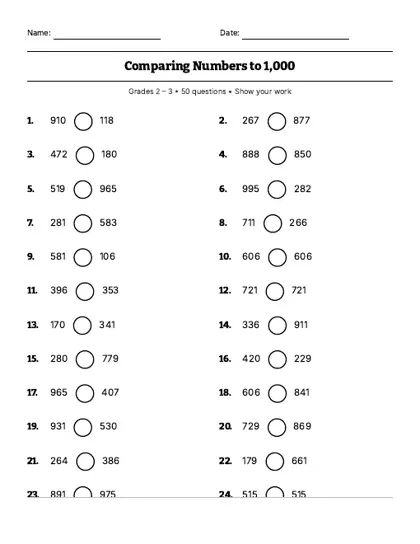 Comparing numbersGrades 1–2
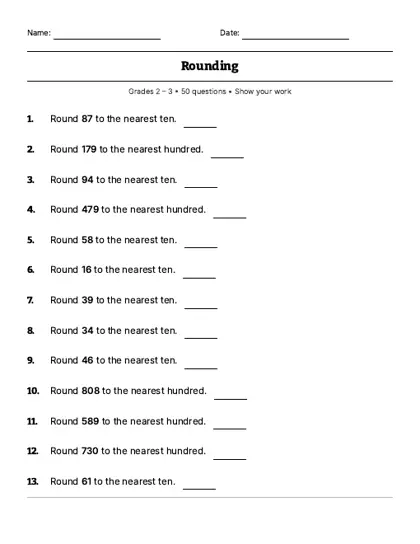 Rounding numbersGrades 3–4
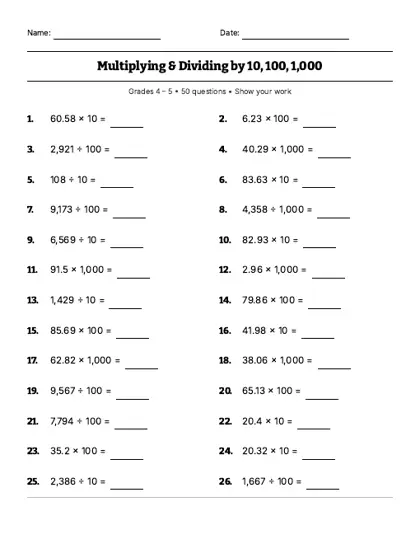 Multiply and divide by 10, 100 and 1000Grades 3–5
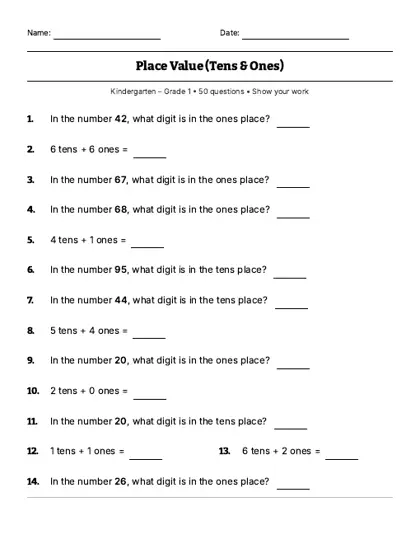 Tens and onesGrade 1
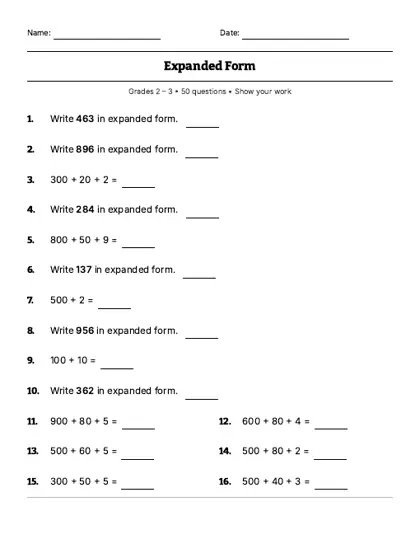 Expanded formGrades 2–3
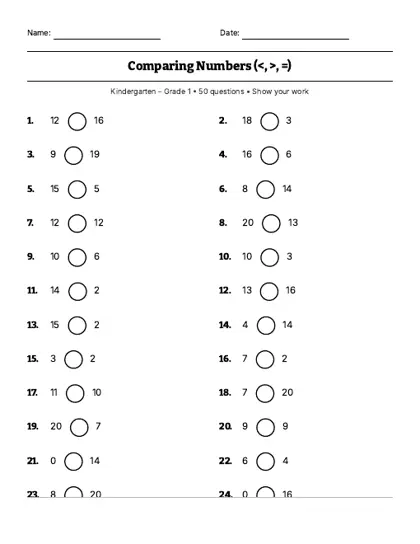 Comparing numbers to 100Grade 1
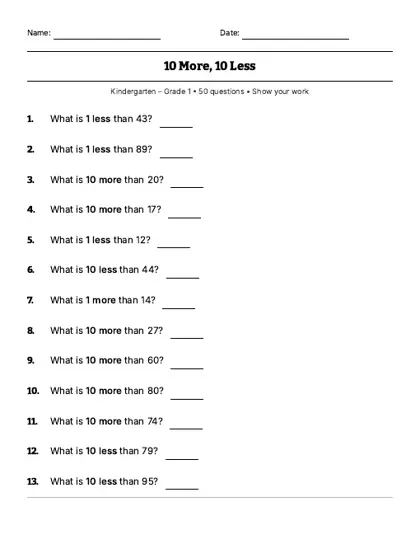 10 more, 10 lessGrade 1
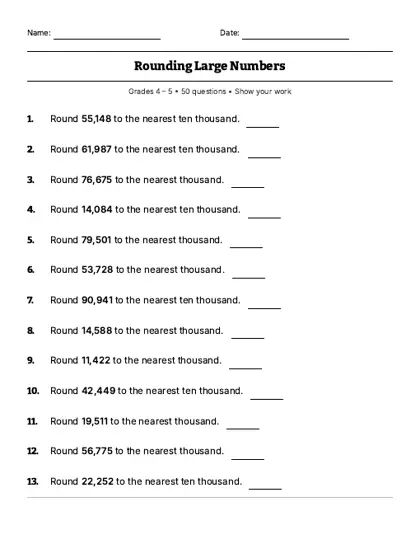 Rounding large numbersGrade 4
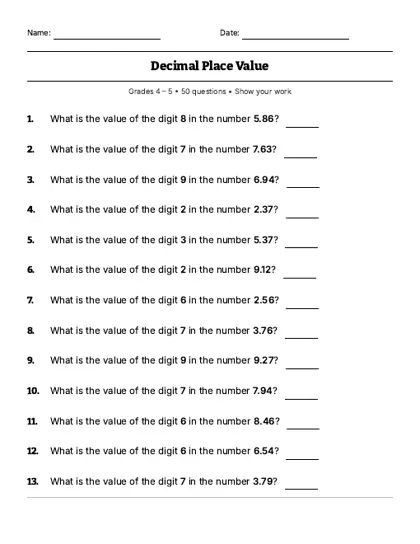 Decimal place valueGrade 5
Make a fresh expanded form test · Place value chart
How to teach place value at home
Bundle in tens
Count a big pile of straws or pasta by bundling every ten with a rubber band. Then count bundles and loose ones.
Use money
$1, 10¢ and 1¢ are hundreds, tens and ones when counting in cents. How many ways can you make 125¢?
Make the biggest number
Roll three dice and arrange the digits to make the biggest and smallest possible numbers.
Read big numbers out loud
Populations, distances and prices are full of big numbers. Read them together and name the places.
Last reviewed
Questions parents ask
What is place value?
Place value is the value of a digit because of where it sits in a number. In 352, the 3 is worth 300, the 5 is worth 50 and the 2 is worth 2. Each place is worth ten times the place to its right.
What is expanded form?
Writing a number as the sum of each digit’s value. 4,507 in expanded form is 4,000 + 500 + 7.
Why does zero matter in place value?
Zero is a placeholder. In 507 it shows there are no tens and keeps the 5 in the hundreds place. Without it, 507 would become 57.
How do you teach place value to kids?
Start by bundling real objects into tens: straws, sticks or cubes. Then use base-ten blocks, a place value chart, and money (dollars, dimes and pennies).
What is the value of the digit 7 in 3,762?
700. The 7 is in the hundreds place, so it is worth 7 hundreds.
What grade learns place value?
Grade 1 learns tens and ones (1.NBT.B.2). Grade 2 learns hundreds, tens and ones to 1,000 (2.NBT.A.1). Grade 4 extends place value to 1,000,000 (4.NBT.A.1), and grade 5 adds decimals to thousandths (5.NBT.A.1).