
2nd grade math
Second grade builds speed and size: all addition and subtraction facts to 20 from memory, adding and subtracting within 100 and 1,000, place value to the hundreds, money, time and the first ideas of multiplication. This page lists every skill in order, what mastery looks like, signs a child needs help, and free 2nd grade worksheets and lessons.
What 2nd graders learn in math
The Common Core focuses grade 2 on place value to 1,000, addition and subtraction within 100 (fluently) and within 1,000 (with models), and measuring with standard units like inches and centimeters. Equal groups and arrays lay the groundwork for multiplication in grade 3.
2nd grade math skills, in order
Operations and algebraic thinking
One- and two-step word problems within 100, all addition and subtraction facts within 20 from memory, odd and even numbers, and arrays up to 5 × 5 as repeated addition.
Number and operations in base ten
Place value to 1,000, skip counting by 5s, 10s and 100s, expanded form, comparing three-digit numbers, adding and subtracting within 100 with regrouping, and within 1,000 using models.
Measurement and data
Measure length in inches, feet, centimeters and meters, estimate lengths, tell time to the nearest 5 minutes, count money and solve money problems, and make picture graphs, bar graphs and line plots.
Geometry
Draw shapes with given features (triangles, quadrilaterals, pentagons, hexagons, cubes), split a rectangle into rows and columns of squares, and split shapes into halves, thirds and fourths.
What mastery looks like by the end of the year
- Knows all addition and subtraction facts within 20 without counting.
- Adds and subtracts 2-digit numbers with regrouping, like 52 − 18 = 34.
- Explains that 352 is 3 hundreds, 5 tens and 2 ones, and writes it in expanded form.
- Counts a mix of quarters, dimes, nickels and pennies.
- Tells time to the nearest 5 minutes.
- Measures in inches or centimeters with a ruler, starting at zero.
Signs your child needs extra help
- Still counts on fingers for facts like 8 + 7.
- Takes the smaller digit from the bigger one in subtraction: 52 − 18 = 46.
- Can’t say what the 5 in 352 is worth.
- Counts coins by number rather than value (three coins = 3 cents).
- Starts measuring from the 1 on the ruler.
Facts to 20 and place value are the two things that make everything else in grade 2 easier. The addition and place value pages are good places to start.
Try a 2nd grade math problem
Tap a question to see the answer and how to get it.
What is 8 + 7?
15. Double 7 is 14, plus 1.
What is 52 − 18?
34. Borrow a ten: 12 − 8 = 4, 4 − 1 = 3.
What is the value of the 5 in 352?
50. It is in the tens place.
How much is 2 quarters, 1 dime and 3 pennies?
63¢. 25 + 25 + 10 + 1 + 1 + 1.
Is 37 odd or even?
Odd. It ends in 7, and 37 objects can’t be put into pairs with none left.
What is 300 + 40 + 6 in standard form?
346.
2nd grade math worksheets
Each one is a free PDF with an answer key and its own page with a preview, tips and a button to make a new version.
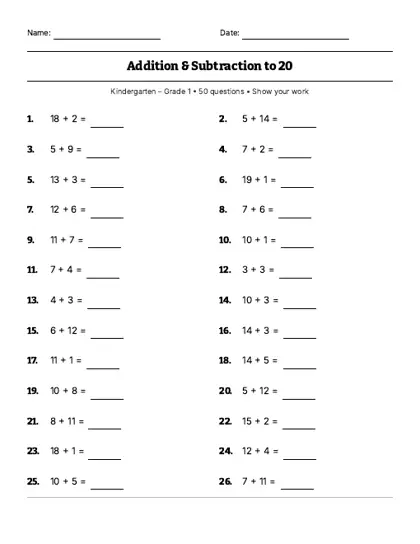 Addition factsGrades 1–2
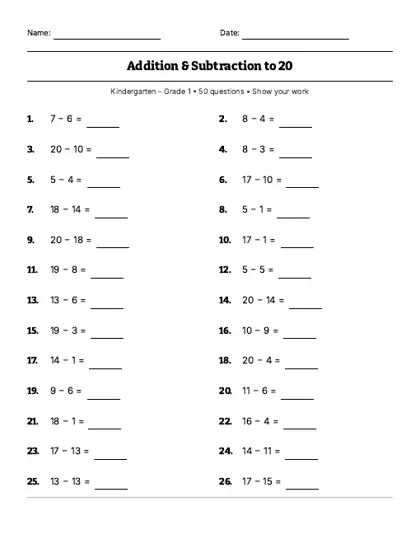 Subtraction factsGrades 1–2
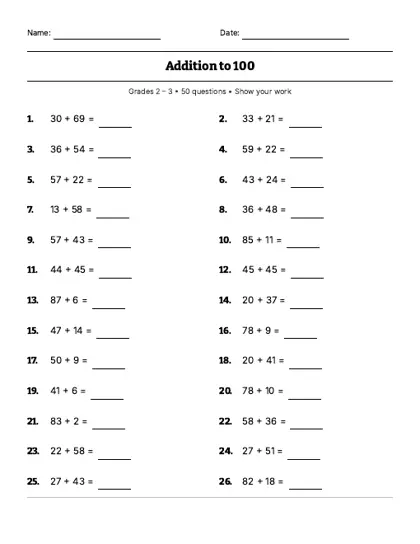 2-digit additionGrades 1–2
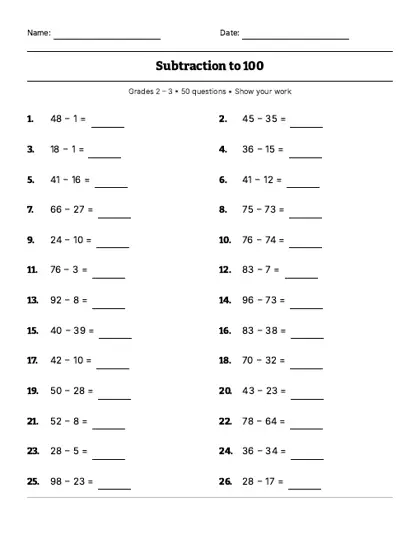 2-digit subtractionGrade 2
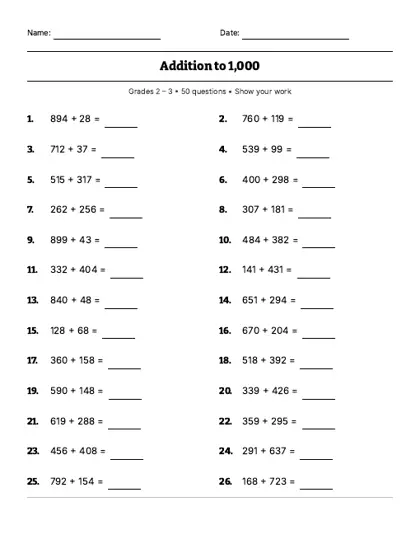 3-digit additionGrades 2–3
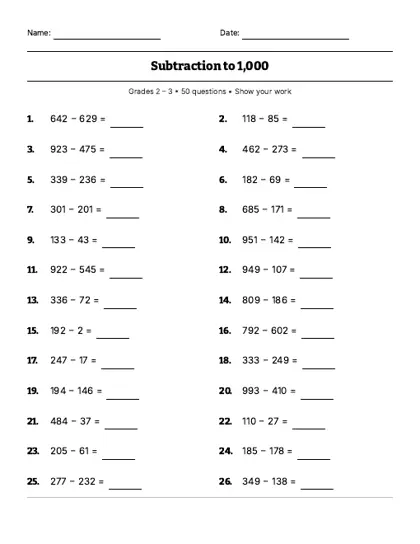 3-digit subtractionGrades 2–3
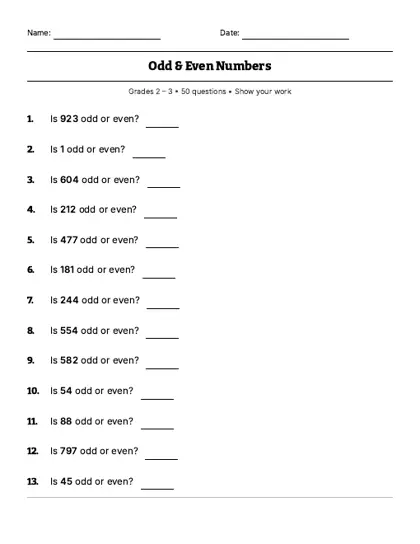 Even and odd numbersGrade 2
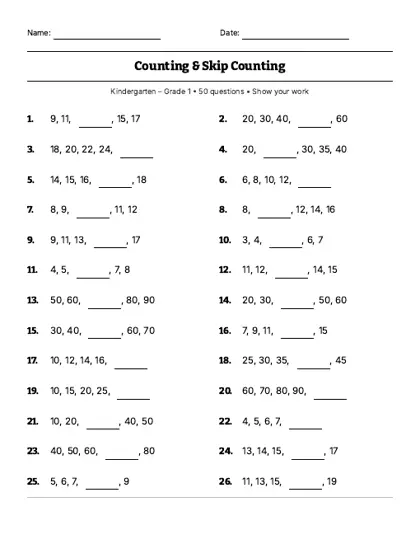 Skip countingGrades 1–2
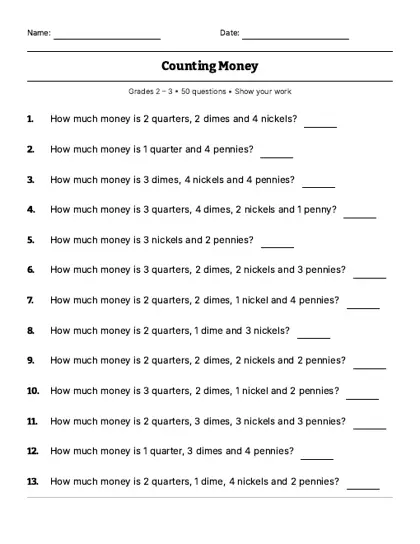 MoneyGrade 2
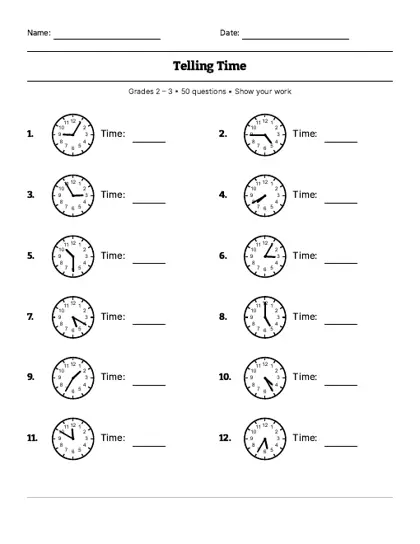 Telling timeGrades 1–3
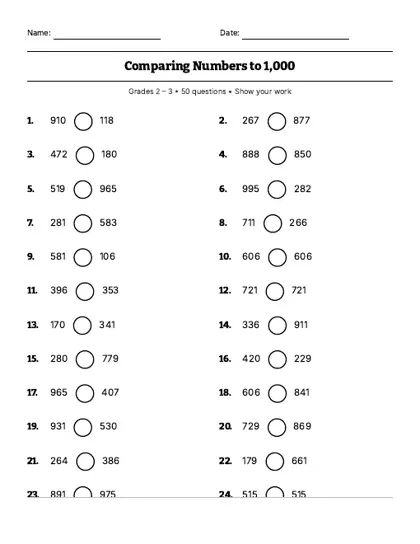 Comparing numbersGrades 1–2
More 2nd grade PDFs
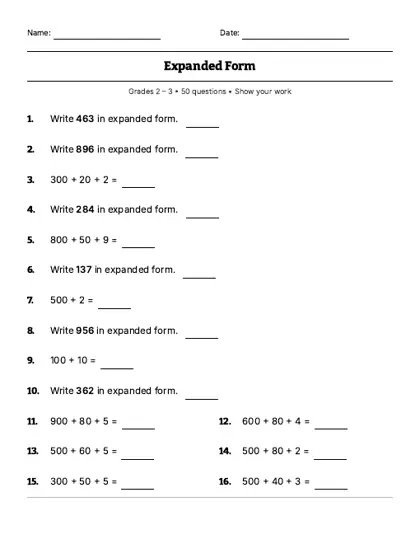 Expanded formGrades 2–3
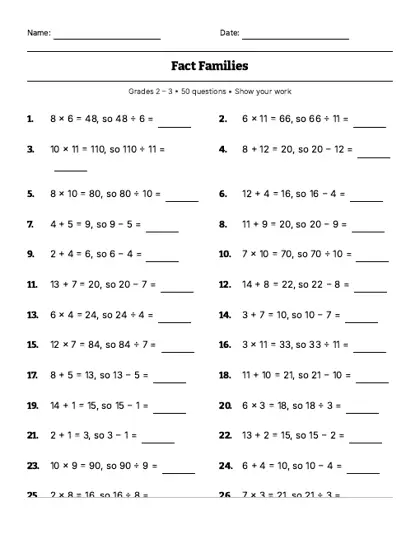 Fact familiesGrades 1–3
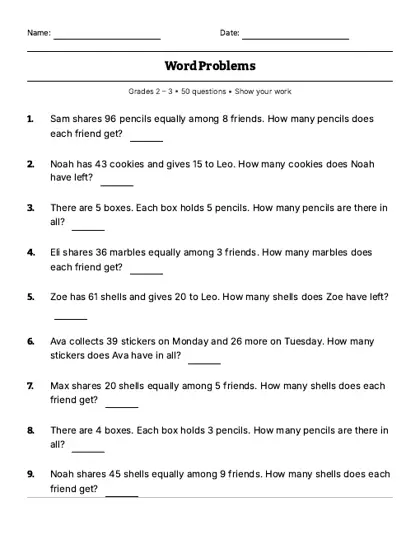 Word problems, grades 2–3Mixed
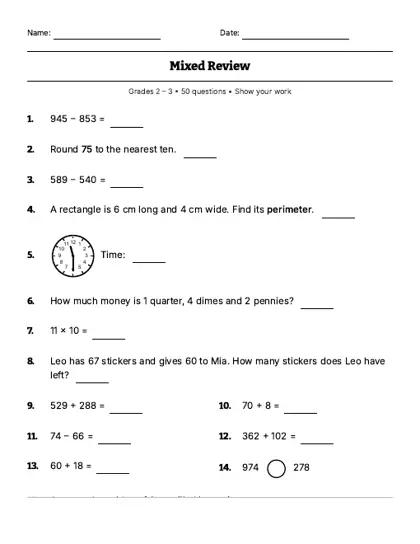 Mixed review, grades 2–3Check for gaps
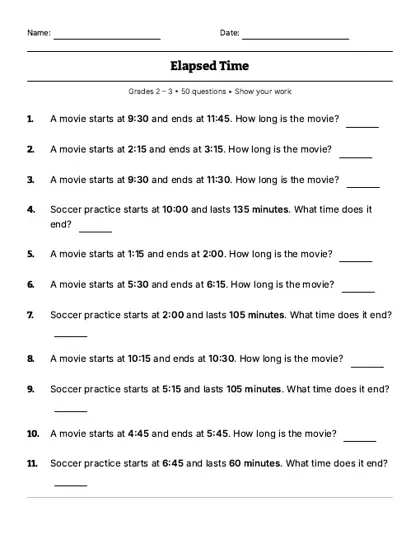 Elapsed timeGrades 2–3
2nd grade math lessons and charts
- 2-digit subtractionRegrouping
- 3-digit additionRegrouping, step by step
- Place valueHundreds, tens and ones
- Counting moneyCoins and bills
- Even and oddPairs and patterns
- Telling timeTo 5 minutes
- US coins chartCoin values
- Place value chartBuild numbers
How to help with 2nd grade math at home
Shop with coins
Give your child coins to pay for small things and count the change. It is money, place value and subtraction at once.
Fact of the day
Pick one tricky fact, like 8 + 7, and ask it at random times during the day.
Measure the house
Use a ruler and tape measure in inches and centimeters. Estimate first, then measure.
Skip count on walks
Count steps by 2s, 5s and 10s. It is the start of multiplication.
See 1st grade math for the year before and 3rd grade math for what comes next.
Last reviewed
Questions parents ask
What math do 2nd graders learn?
All addition and subtraction facts to 20, adding and subtracting within 100 and 1,000, place value to 1,000, skip counting, odd and even, money, time to 5 minutes, measuring length, and arrays as the start of multiplication.
Should 2nd graders know their addition facts?
Yes. By the end of grade 2, children should know all sums of two one-digit numbers from memory (2.OA.B.2).
Do 2nd graders learn regrouping?
Yes. Grade 2 adds and subtracts within 100 with regrouping (2.NBT.B.5) and within 1,000 using models and place value (2.NBT.B.7).
Do 2nd graders learn multiplication?
Not formally, but they build the idea with equal groups and arrays up to 5 × 5, written as repeated addition. Times tables come in grade 3.
How can I help my 2nd grader with subtraction?
Use base-ten blocks or coins to show borrowing, practice facts daily, and ask your child to check answers by adding.
My child is behind in 2nd grade math. Where do I start?
With addition and subtraction facts to 20 and tens and ones. The grades 2–3 mixed review is a quick way to find the gap.